The first-round interview bottleneck
- Calendars that never line up. Finding a slot between an employed candidate and a busy recruiter sometimes takes longer than the interview itself.
- Repetitive first rounds. The same core questions come up with every candidate, before you even know whether they deserve a second interview.
- One-way video isn't enough. A candidate answering alone in front of a camera can't be asked a follow-up, and can't ask their own questions.
How an AI interview works
- The candidate gets a link. They join the interview at the agreed time, from their browser, with no app to install.
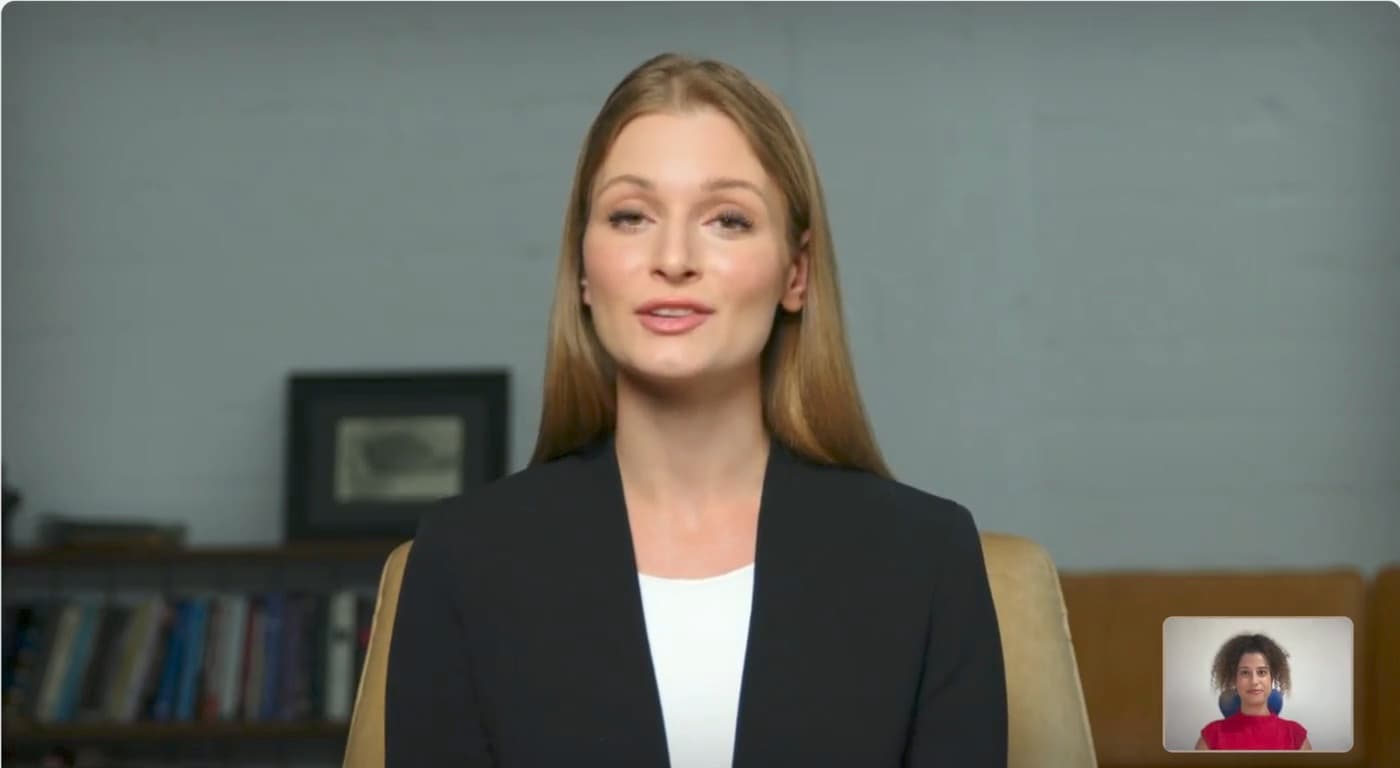
- Alicia leads the conversation. She explains how it will go, follows the question kit, follows up when an answer stays vague and answers the candidate's questions about the role.
- You get the interview summary. The full transcript, a rating for each criterion justified by the answers, and the points to dig into in the next round.
AI interview, assisted interview or one-way video interview?
Three interview formats that meet different needs.
| AI interview | Assisted interview | One-way video interview | |
|---|---|---|---|
| Who leads the conversation | Alicia, the AI interviewer | The recruiter, supported by the agent | No one: the candidate records alone |
| Conversation | Yes, with follow-ups | Yes | No, fixed questions |
| Recruiter's calendar | Not needed | Needed | Not needed |
| Interview summary | Transcript and evaluation by criterion | Transcript and evaluation by criterion | Videos to watch |
| Decision | The recruiter | The recruiter | The recruiter |
AI interview or assisted interview: two ways to run the interview
Delectus offers two interview modes, depending on the stage of the hiring process. In an AI interview, Alicia runs the first interview with the candidate on her own, at the agreed time. In an assisted interview, you lead the conversation, and the interview agent supports you while you stay focused on the exchange.
Both modes rely on the same interview kit and produce the same kind of interview summary. So you can compare candidates for the same job opening, whichever mode was used for each one.
What the candidate experiences during an AI interview
The candidate opens the link they received, allows their camera and microphone, then meets the AI interviewer over video. She introduces herself, explains how the interview will go and how long it will take, and asks the role's questions one by one. When an answer stays vague, she asks for an example, just as an attentive recruiter would.
Unlike a one-way video interview, the candidate talks to someone who listens and reacts. They can ask for a question to be rephrased, come back to an answer or ask a question about the role. At the end, they have time to ask their own questions. They know from the start that they're talking with an AI, and that a recruiter will review their interview.
An interview kit for every role
Before the first interview, Delectus prepares a kit from the job opening. It brings together the role's evaluation criteria and the questions that test them, with useful follow-ups. You review it, remove what doesn't suit you and add your own questions. This is the kit Alicia will follow, and it serves as the scorecard for the evaluation.
For a customer service representative role, the kit might include questions like these.
- "Can you tell me about a time an unhappy customer contacted you? What did you do?"
- "How do you organize your day when several urgent requests come in at once?"
- "What attracts you to this role?"
The assisted interview, inside the platform
When you run the interview yourself, the video call happens directly in Delectus. The transcript appears in real time, and the agent suggests questions or follow-ups when a point in the kit hasn't been covered yet. You no longer need to take notes while listening.
At the end, the analysis is broken down by theme, covering technical skills, soft skills and motivation, and the report writes itself. The interview is recorded, so you can go back to a moment or share it with a hiring manager who wasn't there.
The interview summary from an AI interview
Every interview produces a full transcript and an evaluation criterion by criterion. Each rating is justified by the candidate's answers, with the part of the transcript it's based on. Points to dig into in the next round are flagged, giving you a basis for preparing the interview with the team.
The evaluation is a reasoned opinion. You read it, skim the transcript if needed, and decide who moves on to the next round. The candidate then moves forward in the job's kanban, and the next meeting is booked into your slots, synced with Outlook and Teams.
How should a recruiter prepare an AI interview?
You prepare an AI interview the same way as a traditional one. Define the role's evaluation criteria, usually three to six, then approve the question kit and adapt it if needed. Also specify what information the interviewer can share about the role, such as the remote-work arrangement or the next steps. Finally, tell the candidate clearly about the format, the length and what happens next.
When to choose an AI interview, and when to choose an assisted interview
The AI interview suits first rounds, when many candidates need to be seen quickly and calendars can't keep up. The assisted interview is better for later rounds and for roles where the human relationship matters from the start, such as a management role or a highly sought-after profile. Either way, the recruiter reviews the interview summary and decides what happens next.
The format is chosen per job opening. A candidate who would rather talk to a person can be offered an assisted interview instead.
Mistakes to avoid with AI interviews
The AI interview doesn't replace the whole process. Avoid using it for the final round, offering it without telling the candidate about the format, or reading only the rating without skimming the transcript. The best results come from an AI interview in the first round, followed by a human interview for the shortlisted candidates.
AI interviews and compliance: what the rules say
The GDPR states that a person must not be subject to a decision based solely on automated processing when it significantly affects them. The EU AI Act also classifies candidate evaluation systems as high-risk systems, with a requirement for human oversight.
The AI interview respects this framework. The candidate is told they're talking with an AI, the evaluation is a reasoned opinion, and the recruiter always decides what happens next.
Frequently asked questions
What is an AI-led interview?
It's a job interview conducted by a conversational agent, spoken and over video. At Delectus, the AI follows a question kit defined for the role and produces an evaluation that the recruiter approves.
How is it different from a one-way video interview?
In a one-way video interview, the candidate records their answers to written questions alone. With Alicia, they talk with an interviewer who follows up and answers their questions.
Does the AI decide what happens next?
No. It offers a reasoned evaluation, and the recruiter decides who moves on to the next round.
Which roles is the AI interview suited to?
First rounds, when the goal is to check skills and motivation before an interview with the team. Final rounds stay human.
How do you prepare for an interview with an AI?
The same way as for a traditional interview. Reread the job posting, prepare concrete examples from your experience and test your camera and microphone. The AI asks questions about the role and follows up just as a recruiter would.
How long does an AI interview last?
The length is set with the role's interview kit, usually the same as a traditional first interview.
Are AI interviews legal in France?
Yes, provided you inform the candidate, comply with the GDPR and leave the decision to a human. That's how Delectus works.
Can I watch an interview again?
Yes. The transcript stays in the candidate profile, and assisted interviews held over video in the platform are recorded so they can be reviewed.